
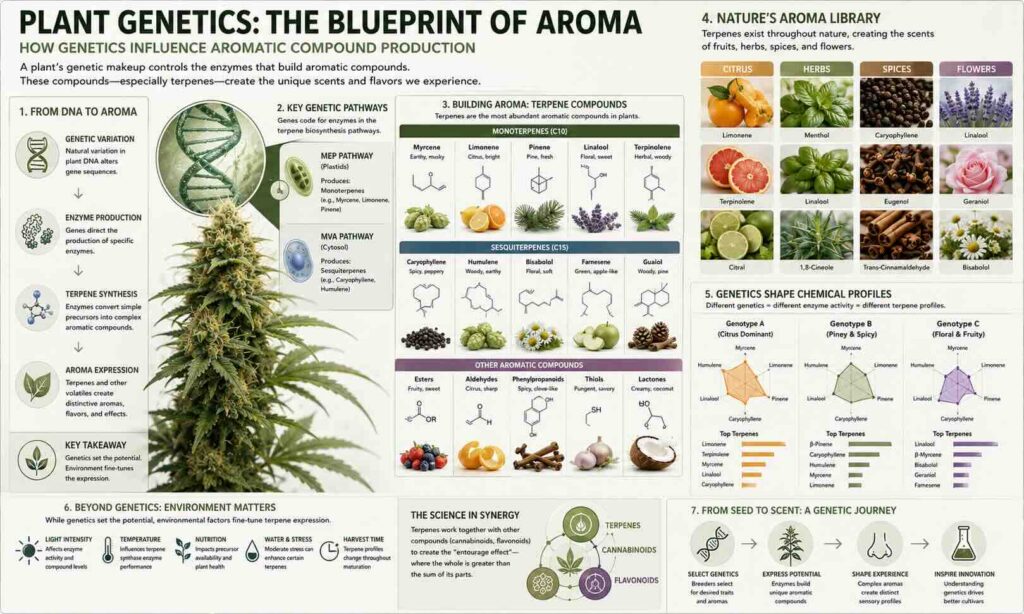
Flavor and aroma are among the most recognizable characteristics of cannabis. Long before growers evaluate plant structure or cultivation performance, many people notice the distinctive scents and flavors associated with different cultivars. These sensory characteristics play an important role in the identity of a variety and are often closely linked to its genetic background. Understanding how genetics influence flavor and aroma helps cultivators appreciate the complexity of modern cannabis breeding and the diversity found within the species.
While environmental conditions and cultivation practices contribute to the final expression of a plant, genetics establish the foundation upon which these characteristics develop. The interaction between inherited traits and growing conditions creates the wide range of aromatic profiles observed in cannabis today.
The Genetic Foundation of Aromatic Traits
Every cannabis plant inherits a unique combination of genetic information from its parent plants. These inherited characteristics influence countless aspects of development, including growth patterns, structure, resilience, and aromatic expression.
Breeding programs often focus on preserving and refining desirable characteristics over multiple generations. Through careful selection, breeders can emphasize traits that contribute to distinctive sensory profiles while maintaining consistency and stability within a cultivar.
Genetics provide the blueprint that guides the development of flavor and aroma throughout the plant’s life cycle.
Without strong genetic foundations, consistent expression becomes much more difficult to achieve.
The Role of Terpenes
Terpenes are naturally occurring compounds found throughout the plant kingdom and are widely recognized for their contribution to aroma and flavor. In cannabis, terpene production plays a major role in shaping the sensory characteristics associated with individual cultivars.
Different genetic lines often demonstrate different terpene profiles, which helps explain why certain varieties are associated with distinct aromatic identities. The diversity of terpene expression contributes significantly to the wide range of scents and flavors available within modern cannabis genetics.
Understanding terpene diversity provides valuable insight into the complexity of cannabis cultivation and breeding.
These compounds are an important part of what makes each cultivar unique.
How Breeding Shapes Flavor Diversity
Modern cannabis breeding has expanded the diversity of available flavor and aroma profiles by combining genetics from different sources. Through selective breeding, cultivators can explore new combinations of characteristics while preserving desirable traits from previous generations.
The result is a continually evolving landscape of cannabis genetics featuring an extraordinary range of sensory expressions. Breeding programs often focus on balancing consistency with innovation, allowing growers to access cultivars that combine stability with distinctive characteristics.
Careful selection remains one of the most important tools available to breeders.
Genetic diversity continues driving innovation throughout the cannabis industry.
Environmental Influence on Genetic Expression
Although genetics establish the potential for flavor and aroma development, environmental conditions influence how these traits are ultimately expressed. Factors such as lighting, temperature, humidity, and cultivation practices all interact with genetic potential during plant development.
Growers interested in exploring modern cannabis genetics can learn more through Ministry of Cannabis. Understanding the relationship between genetics and cultivation conditions helps cultivators better appreciate the factors that shape final plant characteristics.
The interaction between genetics and environment remains one of the most fascinating aspects of cannabis cultivation.
Successful cultivation involves supporting plants so they can express their inherited potential.
Observation and Appreciation of Genetic Diversity
One of the most rewarding aspects of cannabis cultivation is observing how different cultivars express their unique characteristics. Even closely related plants may display subtle variations that reflect their genetic background and environmental experiences.
Keeping cultivation records and comparing different genetic lines can help growers develop a deeper understanding of flavor and aroma development. This knowledge often improves cultivar selection and supports more informed cultivation decisions.
Additional information regarding cannabis-related topics and public discussion can be explored through https://www.francetvinfo.fr/societe/cannabis/.
Continuous learning helps cultivators better understand the remarkable diversity found within cannabis genetics.
Final Thoughts
Cannabis flavor and aroma are strongly influenced by genetics, with terpene production and inherited traits playing central roles in shaping sensory characteristics. While environmental conditions affect expression, genetics provide the foundation upon which these qualities develop.
By understanding the relationship between breeding, terpene diversity, and cultivation practices, growers can gain a deeper appreciation for the complexity of cannabis genetics. The extraordinary variety of flavors and aromas available today reflects decades of careful selection and ongoing innovation within the cannabis community.